- What Importing a 120V U.S. Garbage Disposal to a 220V Kitchen Taught Me
- Interactive Calculator: U.S. State Rates vs. South Korea Progressive Tiers
- Why the Same 1,500W Space Heater Triggers Completely Different Decisions in Seoul vs. the U.S.
- 120V Convenience vs. 220V/240V Power Delivery: Why Outlet Voltage Changes Everything
- What Analyzing 60+ U.S. Appliance Guides Taught Me About Real Electric Bills
- Practical Rules Before You Buy High-Wattage or Imported Appliances
- Frequently Asked Questions
- Sources and Methodology
Editor’s Note & Quick Comparison
When I imported a U.S.-spec 120V InSinkErator Evolution 200 garbage disposal for my kitchen in Seoul, buying the step-down transformer taught me a lesson no wattage chart ever mentions: electricity bills are shaped as much by grid voltage and tariff structure as by the appliance itself. In 2026, South Korea’s KEPCO residential low-voltage rate starts around 11.2¢/kWh in Tier 1 (120.0 KRW base + surcharges/taxes at 1,346 KRW/USD) and jumps to 26.9¢/kWh in Tier 3, whereas the August 2026 U.S. residential average is a flat-or-TOU 18.16¢/kWh—spanning 14.63¢/kWh in Washington to 29.75¢/kWh in California.
Most people assume an appliance uses the same energy and costs roughly the same to run no matter where you plug it in—just multiply watts by hours and check the rate. I used to think that way too, until a very practical kitchen project in Seoul forced me to look much closer at what happens between the wall outlet, the transformer coil, and the monthly utility bill.
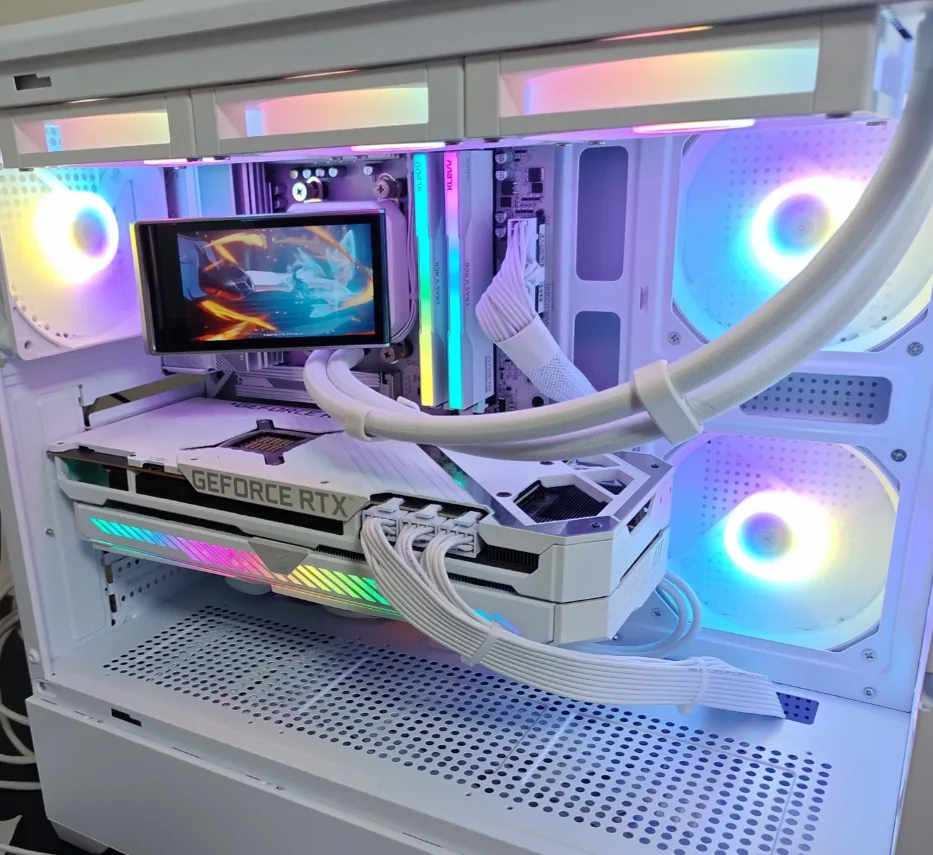
My habit of tracking every watt actually started at home in Seoul—out of pure self-preservation. Whenever I sat down at my desktop PC running an NVIDIA RTX 3080 GPU and an AMD Ryzen 7 9800X3D processor, I could feel my wife eyeing the monthly power bill. In South Korea, where crossing the 400 kWh residential threshold triggers a steep progressive jump, a 450W–550W gaming or workstation rig running for a few hours every evening feels very different from a 45W laptop. I started calculating exact kilowatt-hours per session just to prove what the PC was—and was not—actually costing us. Once I realized how helpful real numbers were for settling household debates, I began looking at U.S. utility tariffs and noticed something striking: American households face an even more fragmented maze of state rates, Time-of-Use (TOU) windows, and tiered billing than we do in Korea. That realization is what pushed me to build WattCostCalculator.com.
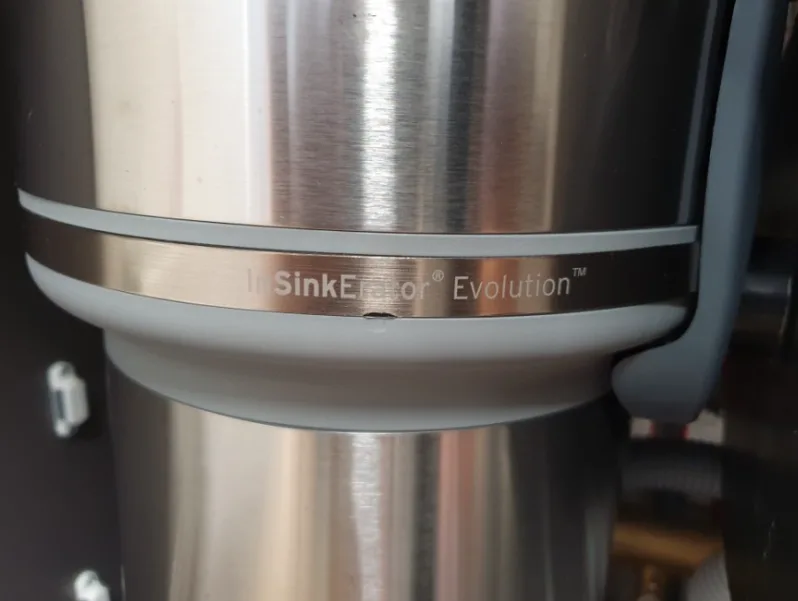
Around the same time, a very practical kitchen project reinforced that lesson. I imported an American InSinkErator Evolution 200 food waste disposer for my sink in South Korea. On paper, a garbage disposal looks like a trivial electrical load. Manufacturer ratings show minimal annual energy use because you only run it for 20 to 30 seconds at a time. Yet installing that single U.S. appliance in a 220V Korean apartment meant buying a bulky external step-down transformer, clearing precious under-sink cabinet space, and confronting two realities that separate U.S. and Korean home electricity: 120V vs. 220V branch circuit physics and progressive penalty tiers vs. regional U.S. tariffs.
What Importing a 120V U.S. Garbage Disposal to a 220V Kitchen Taught Me
Direct Answer: U.S. kitchen branch circuits deliver 120V, meaning an induction motor draws nearly twice the amperage—and faces far steeper startup surge demands—than an equivalent 220V motor, which forces a 2,000W to 3,000W step-down transformer when used abroad.
If you have only ever lived in one country, you rarely think about outlet voltage. In the United States, standard wall receptacles supply 120 volts at 60 Hz, reserving 240 volts for heavy loads like dryers, ranges, and Level 2 EV chargers. In South Korea, every standard wall outlet delivers 220 volts at 60 Hz. When my U.S.-spec InSinkErator Evolution 200 arrived, the nameplate made the math immediately uncomfortable: 120V, 60 Hz, and 10.2 amps of average running load on a 1.0 HP induction motor (as documented in the InSinkErator Evolution 200 specification sheet).
At 120V, 10.2 amps already equals roughly 1,224 volt-amperes of steady running draw. Worse, single-phase induction motors pull several times their running current during the split-second locked-rotor startup surge—especially if food scraps create mechanical resistance in the grind chamber. A cheap 1,000W travel converter would trip or overheat almost immediately. To keep the motor from stalling or burning out, I had to buy a heavy iron-core 220V-to-120V step-down transformer rated well above the running wattage.
The Hidden Cost Nobody Mentions: Transformer No-Load Overhead
Once that heavy transformer sat under my kitchen sink, a second electrical reality kicked in. The disposal itself runs for maybe 30 seconds a day—barely enough electricity to notice on any bill. However, a traditional iron-core step-down transformer plugged into a 220V wall outlet continuously energizes its primary winding even when the disposal wall switch is turned off. That magnetizing current generates steady no-load core loss (heat and hum) 24 hours a day unless you physically cut power upstream with a switched outlet or smart plug.
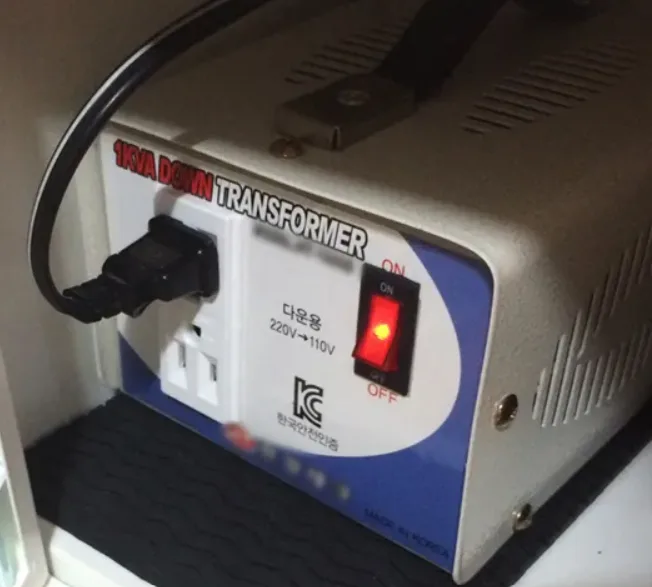
For me, that experience changed how I read appliance specifications. A nameplate tells you what a device draws at full rated load under ideal voltage, not what your wall meter records across a 30-day billing cycle. If you ignore standby losses, transformer overhead, or how a motor behaves at startup, your estimate can easily drift far away from your actual utility statement. That exact realization is why I started cross-checking U.S. EIA residential rate tables against real appliance duty cycles and building the tools on our U.S. Electricity Rates by State Hub.
Interactive Calculator: U.S. State Rates vs. South Korea Progressive Tiers
Use the comparison calculator below to see how the exact same appliance behaves on a U.S. residential bill versus a South Korean KEPCO residential low-voltage bill. Switch between U.S. states and Korean progressive tiers to see why a high-wattage appliance feels painless in Washington or Texas—or in Korea’s Tier 1—but suddenly stings once a household crosses 400 kWh per month.
Same Appliance: U.S. vs. South Korea Monthly Cost
Method & assumptions: KEPCO residential low-voltage marginal rates include 120.0 / 214.6 / 307.3 KRW/kWh base energy rates plus 9.0 KRW climate charge, 5.0 KRW fuel adjustment, 10% VAT, and 2.7% Electric Power Industry Basis Fund (converted at 1 USD = 1,346 KRW). Excludes fixed monthly meter/base charges.
Why the Same 1,500W Space Heater Triggers Completely Different Decisions in Seoul vs. the U.S.
Direct Answer: In South Korea, adding a 1,500W space heater for 4 hours a day (180 kWh/month) can push an ordinary 250 kWh household straight from Tier 2 into Tier 3, turning what looks like a cheap 11.2¢/kWh baseline into a 26.9¢/kWh marginal penalty—almost matching New York and California rates.
When I analyze U.S. electricity bills for readers in states like Washington, Texas, or Ohio, the math is usually linear. If your utility charges 15.91¢/kWh in Texas, your first kilowatt-hour of space heating costs the exact same 15.91 cents as your 900th kilowatt-hour. You might pay more during peak afternoon hours if you are on a Time-of-Use (TOU) plan, or cross a seasonal baseline in California, but for most American households, running one extra appliance does not retroactively triple the unit price of electricity across your home.
Living in Seoul trains you to think differently. Under KEPCO's residential low-voltage progressive structure (verified via Korea's Ministry of Government Legislation EasyLaw portal and KEPCO Cyber Branch), household electricity is split into three steep blocks during non-summer months:
- Tier 1 (0 to 200 kWh): 120.0 KRW/kWh base energy charge plus 910 KRW monthly base fee. Including the 9.0 KRW climate/environment fee, 5.0 KRW fuel cost adjustment, 10% VAT, and 2.7% Electric Power Industry Basis Fund, the effective marginal rate is roughly 151.0 KRW/kWh (11.22¢/kWh at 1,346 KRW/USD).
- Tier 2 (201 to 400 kWh): 214.6 KRW/kWh base energy charge plus 1,600 KRW monthly base fee—an effective marginal rate of roughly 257.6 KRW/kWh (19.14¢/kWh).
- Tier 3 (401+ kWh): 307.3 KRW/kWh base energy charge plus 7,300 KRW monthly base fee—an effective marginal rate of roughly 362.1 KRW/kWh (26.90¢/kWh).
Notice what happens when you step back and look at those numbers side by side. South Korea's Tier 1 rate (11.22¢/kWh) is actually cheaper than every major U.S. state average I track—even hydro-rich Washington State at 14.63¢/kWh. That is why a single-person apartment in Seoul running a refrigerator, laptop, and occasional LED lighting can get a shockingly low electric bill. Yet the moment a family runs an electric space heater, an electric dryer, or heavy summer air conditioning and crosses 400 kWh, every additional kilowatt-hour suddenly costs 2.4 times as much as Tier 1, plus the monthly base fee jumps from 1,600 KRW to 7,300 KRW.
| Tariff / Region (2026 Verified) | Effective Rate (¢/kWh) | 1,500W Space Heater (4 hrs/day · 180 kWh/mo) | 200W Constant Load (24 hrs/day · 144 kWh/mo) | Billing Behavior |
|---|---|---|---|---|
| South Korea KEPCO Tier 1 (0–200 kWh) | ~11.22¢ (₩151) | $20.20 | $16.16 | Low baseline; easily exceeded by heating/cooling |
| Washington State (EIA Aug 2026) | 14.63¢ | $26.33 | $21.07 | Flat residential average; hydro-dominant grid |
| Texas (EIA Aug 2026) | 15.91¢ | $28.64 | $22.91 | Retail choice plans; flat or tiered kWh blocks |
| U.S. National Average (EIA Aug 2026) | 18.16¢ | $32.69 | $26.15 | Benchmark across all U.S. residential utilities |
| South Korea KEPCO Tier 2 (201–400 kWh) | ~19.14¢ (₩258) | $34.45 | $27.56 | Tracks closely with the U.S. national average |
| South Korea KEPCO Tier 3 (401+ kWh) | ~26.90¢ (₩362) | $48.42 | $38.74 | 2.4× Tier 1 energy rate + higher base fee |
| New York (EIA Aug 2026) | 28.65¢ | $51.57 | $41.26 | High delivery + supply charges |
| California (EIA Aug 2026) | 29.75¢ | $53.55 | $42.84 | Baseline tiers + aggressive TOU peak spreads |
Notes: U.S. figures reflect EIA Table 5.6.A August 2026 residential averages. Korea figures reflect KEPCO low-voltage non-summer marginal energy rates including climate, fuel, 10% VAT, and 2.7% basis fund at 1 USD = 1,346 KRW.
Even in July and August, when KEPCO temporarily widens Tier 1 to 0–300 kWh and Tier 2 to 301–450 kWh to cushion summer air-conditioning bills, crossing above 450 kWh still puts households squarely into Tier 3. That structural difference explains why Korean households obsess over whether their monthly meter sits at 380 kWh or 420 kWh, whereas our Space Heater Electricity Cost Guide focuses U.S. readers on wattage, thermostat duty cycles, and room insulation rather than an abrupt 400 kWh cliff.
120V Convenience vs. 220V/240V Power Delivery: Why Outlet Voltage Changes Everything
Direct Answer: Because electrical power equals volts multiplied by amps, a 220V or 240V circuit delivers the same wattage with roughly half the current of a 120V circuit—allowing higher-power kettles, induction cooktops, and dryers on standard outlets without tripping a breaker.
After my InSinkErator Evolution 200 transformer experience, I started paying close attention to how voltage shapes everyday appliances on both sides of the Pacific. In a Korean 220V home, a 16-amp standard wall circuit can safely supply up to 3,520 watts peak (and roughly 2,800 watts continuously under conservative safety margins). That is why a 2,200W electric kettle boils water rapidly from a regular kitchen counter outlet, and a plug-in induction burner or heat-pump dryer needs no special electrician visit.
In the United States, a standard 15-amp, 120-volt branch circuit tops out at 1,800 watts peak—and under the National Electrical Code (NEC) continuous-load 80% rule, you only want 1,440 watts of sustained draw on a 15A circuit (or 1,920 watts on a 20A circuit). That single physical ceiling is why almost every American portable space heater, hair dryer, microwave, and toaster oven clusters around 1,500 watts, and why heavy appliances like clothes dryers, water heaters, and Level 2 EV chargers require dedicated 240-volt double-pole circuits.
| Household Scenario | U.S. Typical Setup (120V / 240V) | South Korea Typical Setup (220V) | Practical Impact on Cost & Hardware |
|---|---|---|---|
| Under-sink Garbage Disposal (1.0 HP Evolution 200) | Direct 120V outlet (10.2 A running) | Needs 220V-to-120V step-down transformer if U.S.-imported | Added transformer cost, cabinet space, and potential 24/7 no-load core loss |
| Portable Space Heater | Capped at 1,500W on 120V 15A circuit | 2,000W+ models run on standard 220V outlets | Higher-wattage 220V heaters hit Tier 3 faster if used all evening |
| Home EV Charging | Level 1 (120V ~1.4 kW) vs. Level 2 (240V 7.7–11.5 kW) | Dedicated EV charger / apartment slow-charge tariff | U.S. 120V takes ~2–5 miles/hr; 240V matches ~25–44 miles/hr |
| Electric Kettle / Induction | 120V kettles capped at ~1,500W; ranges need 240V | 2,000W–3,000W kettles & 1-burner inductions plug into 220V | Faster boil times at 220V; total kWh per liter heated stays nearly identical |
Here is a subtle point I often clarify when readers ask about voltage and bills: 220V or 240V does not magically cut your kilowatt-hour usage in half for resistive heat. Heating a liter of water or warming a cold room requires the same total watt-hours whether you pull 1,500W for 4 minutes at 120V or 2,200W for roughly 2.7 minutes at 220V. Where voltage matters is circuit headroom, charging speed, and conversion losses. In my kitchen, converting 220V down to 120V introduced an unnecessary extra conversion step—and if you leave a transformer energized around the clock, that idle loss can easily consume more electricity in a week than the garbage disposal itself consumes in an entire year.
What Analyzing 60+ U.S. Appliance Guides Taught Me About Real Electric Bills
When I sit down to research and verify appliance guides for this site—checking U.S. Department of Energy (DOE) Energy Saver documentation and ENERGY STAR Product Finder test data—three patterns keep showing up regardless of whether a home sits in Seoul, Seattle, or San Diego:
- Short-burst high-wattage appliances rarely break a budget: A 1,200W garbage disposal or 1,500W microwave sounds intimidating on a spec sheet, yet 30 seconds to 5 minutes a day adds pennies per month. Do not waste mental energy micromanaging 30-second bursts unless you are adding an always-on transformer behind them.
- Low-wattage 24/7 loads quietly dominate baseline bills: A 15W transformer idle draw, a 45W garage router/mesh stack, or a 100W heated pet pad running 24 hours a day consumes 10.8 kWh to 72 kWh every month without ever feeling "hot" or noticeable. In Korea, that silent 50–70 kWh baseline can be the exact margin that pushes a household over the 400 kWh Tier 3 line.
- Thermostat duty cycles beat nameplate watts every time: A 1,500W space heater in a drafty room runs near 100% duty cycle and costs $32.69/month at 4 hours/day (18.16¢/kWh). An oil-filled radiator or well-insulated room where the thermostat cycles 40% of the time cuts that bill by 60%—even though both nameplates say 1,500W.
Practical Rules Before You Buy High-Wattage or Imported Appliances
If you are an expat moving appliances between countries, a homeowner eyeing a 240V upgrade, or simply someone trying to figure out why your winter bill jumped, these four checks will save you money before you ever plug anything in:
- Avoid importing 120V motor-driven appliances to 220V countries: Unless you already own a specialized unit you cannot replace locally, buying a native 220V appliance eliminates transformer cost, under-cabinet clutter, and 24/7 magnetizing core loss. If you must use a step-down transformer for an induction motor, size it at 2.5× to 3× the running wattage and put it on a switched outlet you turn off after use.
- Check your marginal rate, not your average rate: In progressive or tiered markets—whether KEPCO Tier 3 in Korea or tiered utility plans in California—the true cost of adding a new space heater or second fridge is the top tier rate, not the blended average printed at the top of your bill.
- Audit 24-hour phantom loads once a quarter: Every 10 watts running 24/7 equals 7.2 kWh per month ($1.31/month at 18.16¢/kWh, or $1.94/month in KEPCO Tier 3). Five forgotten 10W adapters or transformers quietly add $6.50 to $9.70 every month.
- Pair high-draw habits with Time-of-Use windows where available: In the U.S., shifting EV charging, dishwashers, and electric dryers out of 4 PM–9 PM peak windows can cut per-kWh costs more dramatically than swapping appliances.
Frequently Asked Questions
Does a 220V appliance use less electricity than a 120V appliance?
Not for the same amount of work. Power in watts equals volts multiplied by amps, so a 220V appliance draws roughly half the amperage of a 120V appliance at the same wattage, but total kilowatt-hours (kWh) depend on watts multiplied by hours. Where 220V helps is allowing higher-wattage motors and heating elements on standard outlets without heavy wiring or conversion losses.
Why do you need such a large step-down transformer for a garbage disposal?
Garbage disposals use single-phase induction motors. While a 1.0 HP unit like the 120V Evolution 200 averages 10.2 amps (~1,224 VA) while running at 120V, its locked-rotor startup surge can briefly spike several times higher. Sizing a transformer at 2,000W to 3,000W prevents voltage sag and overheating during startup.
Is electricity cheaper in South Korea or the United States?
It depends entirely on monthly usage and U.S. state location. South Korea's KEPCO Tier 1 rate (~11.22¢/kWh effective) is cheaper than most U.S. states, while Tier 2 (~19.14¢/kWh) sits near the August 2026 U.S. average of 18.16¢/kWh. Above 400 kWh/month, Korea's Tier 3 rate (~26.90¢/kWh) approaches high-cost U.S. states like New York (28.65¢/kWh) and California (29.75¢/kWh).
Sources and Methodology
All U.S. state and national residential electricity prices in this article use the U.S. Energy Information Administration (EIA) Electric Power Monthly Table 5.6.A (August 2026 residential averages). Appliance efficiency and operating principles cross-reference the U.S. Department of Energy Energy Saver and ENERGY STAR Product Finder. Garbage disposal electrical ratings are drawn from the official InSinkErator Evolution 200 specification sheet (120V, 60 Hz, 1.0 HP, 10.2 A average load). South Korean residential low-voltage tariff tiers and surcharges (climate, fuel adjustment, 10% VAT, and 2.7% Electric Power Industry Basis Fund) are verified against KEPCO Cyber Branch and the Korea EasyLaw residential electricity guide, converted at 1 USD = 1,346 KRW (November 2026).