

A 20 W heated pet bed running around the clock costs about $2.62 per 30-day month, a 40 W model about $5.23, and a 60 W model about $7.85. Those are ceilings at full rated power for 24 hours. A thermostat-controlled bed uses far less, because the heater cycles off once the surface reaches its set temperature. For a bed that is powered 10 hours a day, a 40 W model costs about $2.18 per month.
- What a heated pet bed actually does
- The calculation
- Monthly cost by wattage and powered hours
- The same 40 W bed in four states
- A worked winter example
- Surface temperature and comfort
- Placement and heat loss
- Outdoor and garage installs
- Maintenance and replacement
- Comparing a heated bed with other warming options
- Choosing a wattage: small pets, medium pets, and large beds
- Use a timer or a smart plug, with care
- Electrical safety that affects the bill
- Frequently asked questions
- Sources and method
What a heated pet bed actually does
A heated pet bed is a low-wattage resistive element sewn into a pad or mattress. Its job is to keep the surface near a comfortable temperature for a resting animal, not to heat a room. Most beds have a thermostat or a simple controller that switches the element off when the surface reaches its set point, and back on when it cools. The electrical use therefore depends on how much heat the bed loses, not only on the wattage printed on the label.
Heat loss depends on the surroundings. A bed on a cold tile floor loses heat through the base, and a bed in a drafty room loses heat from the top surface. A bed with a thick, insulating cover or a raised base in a warm room loses less heat and cycles less often. This is why two identical beds in different homes can have very different monthly bills.
The calculation
Energy in kilowatt-hours equals watts multiplied by hours, divided by 1,000. A 40 W pad powered for 24 hours uses 0.96 kWh per day, or 28.8 kWh per 30-day month. At 18.16 cents per kWh from the U.S. Energy Information Administration’s August 2026 residential average, that is about $5.23. The same pad powered for 10 hours uses 12 kWh per month, or about $2.18.
Because a thermostat controls the element, the powered hours are not the same as the hours the element is actually on. The calculation gives an upper bound for the schedule. A meter reading over a week gives the real average, and that is the number to use for an accurate bill.
Monthly cost by wattage and powered hours
The table below uses three example wattages that match common pet bed and pad sizes, and three daily schedules, at 18.16 cents per kWh. It is a planning table for the ceiling of each schedule. Check the wattage on your own product label before using a row.
| Bed wattage (example) | 4 hours per day | 10 hours per day | 24 hours per day |
|---|---|---|---|
| 20 W | 2.4 kWh, $0.44 | 6.0 kWh, $1.09 | 14.4 kWh, $2.62 |
| 40 W | 4.8 kWh, $0.87 | 12.0 kWh, $2.18 | 28.8 kWh, $5.23 |
| 60 W | 7.2 kWh, $1.31 | 18.0 kWh, $3.27 | 43.2 kWh, $7.85 |
The 24-hour column is the worst case. Most beds in a home do not run that long, but a bed in an unheated garage or a cold room may come close.
The same 40 W bed in four states
Electricity prices change the bill for any heated bed that runs every day. The table below applies the EIA August 2026 residential averages from Table 5.6.A to a 40 W bed on two schedules.
| Location (EIA August 2026 average) | Rate | 40 W, 10 hours per day | 40 W, 24 hours per day |
|---|---|---|---|
| Washington | 14.63 cents/kWh | $1.76 | $4.21 |
| United States | 18.16 cents/kWh | $2.18 | $5.23 |
| New York | 28.65 cents/kWh | $3.44 | $8.25 |
| California | 29.75 cents/kWh | $3.57 | $8.57 |
In New York or California, a 40 W bed on a 24-hour schedule costs about $100 per year in electricity, which is a meaningful number for a single pet bed. Use your own rate from the bill, and compare the seasonal schedule against your winter use.
A worked winter example
Suppose a 40 W bed runs 10 hours a day, every day, from November through March. That is five months at 12 kWh per month, or 60 kWh for the season. At the U.S. average rate of 18.16 cents per kWh, the season costs about $10.90. In New York at 28.65 cents per kWh, the same schedule costs about $17.19. Those are ceilings for the schedule. A thermostat that cycles the element off on mild nights will bring the real figure down.
The same bed used only at night, for 8 hours, costs about $8.72 for the same five months at the U.S. average. A two-hour change in schedule saves about $2.18 over the season. Small changes in the schedule matter less than the choice of wattage, but both add up over a long winter.
Surface temperature and comfort
A pet bed should be warm enough to be inviting and not so warm that it causes discomfort or overheating. Older pets, short-coated breeds, thin pets, and animals with arthritis often rest longer on a warm surface. Puppies and kittens may also prefer a steady warmth. Those needs do not change the arithmetic, but they do change how long the bed needs to run.
Check the surface with the back of your hand. It should feel warm, not hot. If the pet moves off the bed on a regular basis, the surface may be too warm, and a lower setting or a shorter schedule may suit it better. If the pet stays on the bed but seems to shiver or curl tightly, the surface may be too cold, or the bed may not be powered long enough.
Placement and heat loss
Where the bed sits changes how often the thermostat cycles. A bed on a cold concrete floor loses heat through its base, so the element runs more often. Lifting the bed off the floor with a raised base, or placing a rug or insulating layer under it, reduces that loss. A bed near a drafty door or window loses heat from the top surface, so move it to a sheltered corner away from the draft.
Keep the bed out of direct sun in a warm room, because sunlight can push the surface temperature above the thermostat setting and make the controller switch the element off longer than you expect. This does not harm the bed, but it is a sign that the setting may be too high for the room.
Outdoor and garage installs
Outdoor beds on a porch or in a garage need weather-rated components and a protected outlet. Use a cord rated for outdoor use, keep the connection off the ground, and place a cover over the plug where rain or snow can reach it. A GFCI outlet protects against shock if the cord or the bed is damaged, so it is the standard choice for any location where water can reach the outlet.
A garage is often cooler than the house and warmer than the outdoors. A bed in a garage may run more often in winter than one in a heated room. Track the usage for a week in each season, because a garage bed’s bill is more sensitive to the weather than a bed indoors.
Maintenance and replacement
Check the bed’s cover and cord at the start of each season. Wash the cover according to the manufacturer’s directions, and let it dry fully before the pet uses it again, because a damp cover can insulate the element and make it run longer. Look for flattened or damaged padding, which can create hot spots on the element.
Replace the bed when the cord, the plug, or the element shows damage, or when the thermostat no longer holds a steady temperature. A bed that runs continuously without a controller, or with a failed controller, costs more to operate and carries a higher safety risk. The cost of a new bed is usually small compared with the risk of an overheating element.
Comparing a heated bed with other warming options
A heated pet bed is a small load compared with a room heater. A room heater rated at 1,500 W draws about 37 times the power of a 40 W pet bed. The bed warms one animal, while the heater warms a room. For a single pet that spends most of its time in one place, the bed is usually the more efficient choice. For a home with several pets or a cold room, a room heater may be the better option, but its bill will be much larger.
A heated bed also works better with a pet’s own body heat. The pet curls up, the surface stays warm, and the thermostat holds the temperature with little energy. A room heater has to heat the air, which escapes through every gap in the room.
Choosing a wattage: small pets, medium pets, and large beds
Wattage follows the size of the surface, not the size of the pet. A larger bed needs more power to hold its temperature across a bigger area, and it loses more heat through its base. A small pet in a small bed does not need a large element, and a larger element can make the surface too warm for a comfortable rest.
Look for a bed with a clearly stated thermostat range or a fixed low-temperature setting. The thermostat is what keeps the average wattage low. A bed without any control runs at full power continuously, and its monthly cost will match the 24-hour column above.
Use a timer or a smart plug, with care
A timer can cut the powered hours if the pet uses the bed only in certain parts of the day, for example overnight or during the day when the house is cold. Check the manufacturer’s instructions first. Some beds should not be powered off and on repeatedly, and some are designed to run continuously for safety or comfort. A simple outlet timer is safer than a smart plug on a heated bed, because the bed’s own controller stays in charge.
If you use a timer, start with a schedule that covers the pet’s rest periods, then check the surface temperature with your hand after a few days. A bed that feels too cold on the first night may need a longer period, while a bed that feels warm on the surface all night may run too long.
Electrical safety that affects the bill
Use a grounded outlet with GFCI protection, especially for outdoor or garage beds. Keep the cord away from a pet that chews, because a damaged cord can cause a short circuit or an electric shock. Do not run the pad under a thick blanket, which traps heat, makes the thermostat cycle more often, and can overheat the element. Check the cord and plug at the start of each season for cracks, discoloration, or a warm plug.
Do not share the outlet with a heater, a dryer, or other high-power loads. A heated bed is a small load, but a crowded circuit can trip, and a tripped breaker leaves the pet without heat during the night.
Frequently asked questions
Is a heated dog bed expensive to run? At the U.S. average rate, a 40 W bed running 24 hours a day costs about $5.23 per month. A thermostat-controlled bed usually costs less, because the element cycles off.
Can I leave a heated dog bed on all winter? Follow the manufacturer’s instructions for continuous use. Some beds are designed to run unattended, and others are meant to warm only when the pet is on them. Check the manual for your model before leaving it on.
Does the bed’s size change the cost much? Yes, through wattage. A larger bed with a higher wattage costs more to run, but the difference depends on the schedule. A 60 W bed on 10 hours a day costs about $3.27 per month at the U.S. average, while a 20 W bed on 24 hours costs about $2.62.
How do I measure my own bed? Plug the bed into a plug-in energy meter for seven days, record the average daily kWh, and multiply by 30 for the monthly figure. Use the calculator below with the wattage from your label to compare.
What would this cost in your home?
Adjust the starting values to match your appliance and electricity plan.
Sources and method
Monthly energy is calculated as watts multiplied by hours per day, multiplied by 30 days, divided by 1,000. Cost is that energy multiplied by the residential rate. The U.S. average rate of 18.16 cents per kWh and the state averages come from the EIA Electric Power Monthly, Table 5.6.A for August 2026. The U.S. Department of Energy Energy Saver site gives general guidance on household energy use and appliance efficiency. The wattages in the tables are examples for planning. Check the label on your own product for its rated wattage.
Last checked: November 21, 2026. These are calculated estimates from example wattages and average tariffs, not measured results for any specific pet bed.
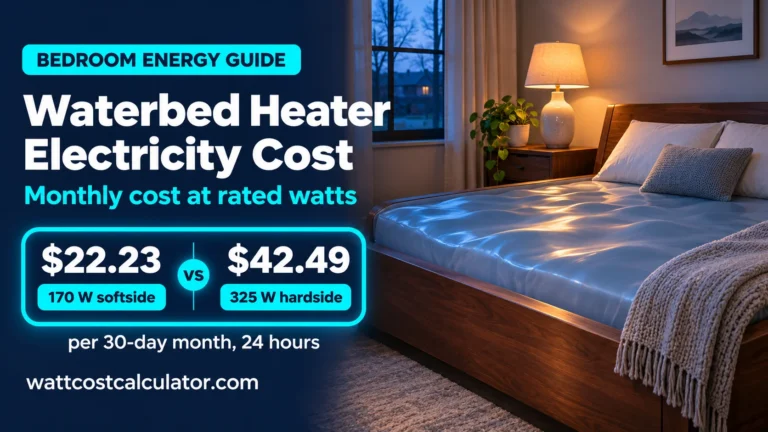
Waterbed Heater Electricity Cost: 170 W vs 325 W Per Month
A waterbed heater costs about $22.23 to $42.49 a month at 18.16¢/kWh if it runs 24 hours at 170 W or 325...

Infrared Sauna Electricity Cost: Cost Per 1-Hour Session by Model
An infrared sauna costs about $0.25 to $0.49 per one-hour session at 18.16¢/kWh, depending on model. Here is the cost per session...
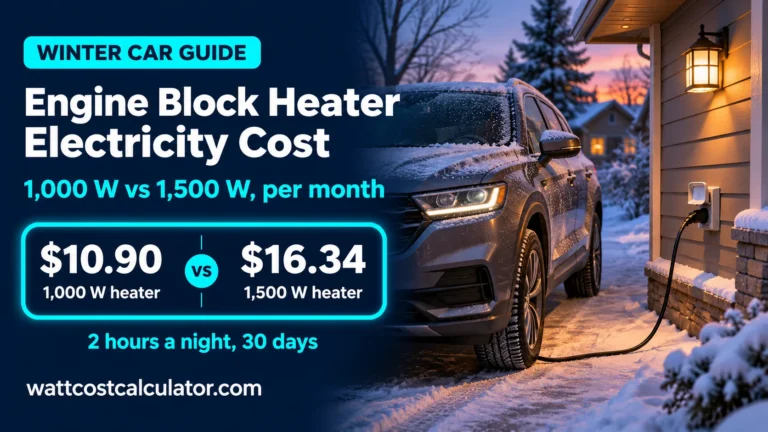
Engine Block Heater Electricity Cost: 1,000 W vs 1,500 W Per Month
An engine block heater costs about $10.90 to $16.34 a month at 18.16¢/kWh when plugged in 2 hours a night at 1,000...

Hot Tub Electricity Cost in Winter: 240V vs. 120V Plug-and-Play Spas
Running a full-foam 240V hot tub in freezing winter weather costs roughly $51.76 per 30-day month at 18.16¢/kWh, while an uninsulated 120V...