
- Sensor dry vs. timed dry: what changes?
- How sensor and timed controls appear on real dryer models
- Example: calculate the difference per load
- Compare cycles at the same dryness
- What would this cost in your home?
- Why extra minutes do not translate neatly to watts
- Compare your own loads fairly
- When a sensor cycle may disappoint
- Longer drying times and safety
- Gas vs. electric dryers
- Keep the bigger laundry bill in view
- Frequently asked questions
Sensor dry can reduce the cost of overdrying, but the savings depend on how much electricity the two complete cycles actually use. In an illustrative electric-dryer comparison, a 3.0 kWh timed cycle costs 60¢ and a 2.4 kWh sensor cycle costs 48¢ at 20¢/kWh. At five loads a week, the difference is about $31.20 a year. These are example inputs, not measured averages or a current national electricity rate.
The useful comparison is between loads that reach similar dryness. A sensor cycle that stops too early and needs a second run may not save energy. Fabric mix, load size, venting and sensor condition all affect the result.
Sensor dry vs. timed dry: what changes?
Timed dry runs for the selected duration, even if some clothes become dry sooner. Automatic or sensor cycles aim to end the cycle when a target dryness is reached. Check your manual: an automatic setting may use moisture sensing, temperature sensing, or both, and names vary by model. ENERGY STAR describes automatic termination as a way to reduce overdrying and save energy; it does not guarantee savings for every load. Source: ENERGY STAR clothes dryers.
How sensor and timed controls appear on real dryer models
These manufacturer examples show how the two control approaches can appear in the same product category. They do not establish which cycle uses less energy: cycle kWh depends on the selected program, load, moisture level and installation.
| Example model | Capacity | Moisture-sensing features | Timed or energy options |
|---|---|---|---|
| Whirlpool WED6150PB | 7.0 cu. ft. | Two sensors track moisture and temperature and can stop a cycle when the load is dry | Timed Dry offers 15, 30, 60 or 90 minutes |
| Whirlpool WED8127LW | 7.4 cu. ft. | Three sensors track moisture and temperature to adapt the cycle | ENERGY STAR certified; EcoBoost uses less heat with a longer cycle |
Feature details are from the WED6150PB and WED8127LW manufacturer pages. Because these are separate models, their specifications cannot isolate the effect of cycle mode. Compare sensor and timed settings on the same dryer when estimating your own difference.
Example: calculate the difference per load
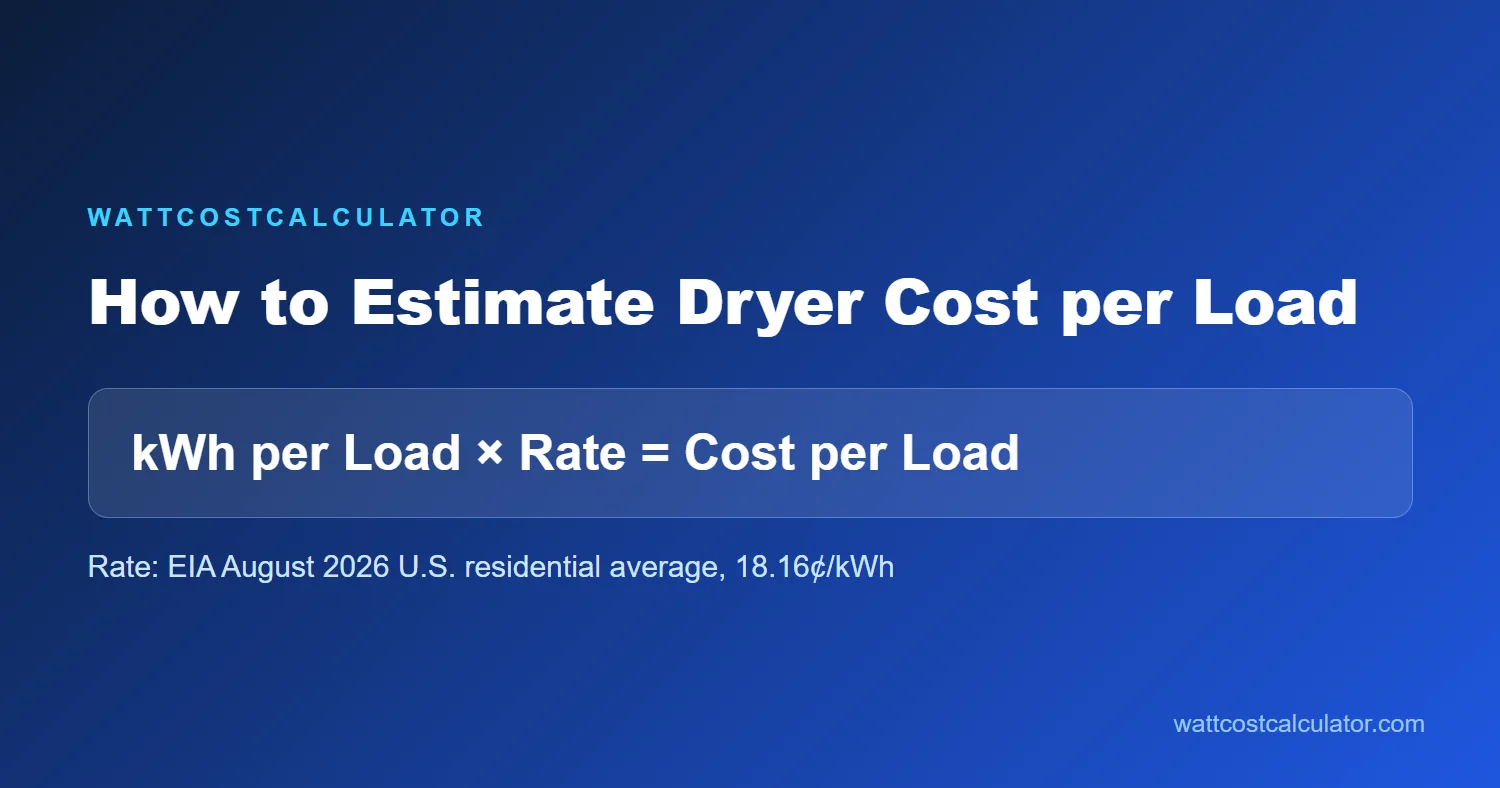
Assume both cycles produce comparable dry laundry. We use 3.0 kWh per timed load and 2.4 kWh per sensor load, five loads per week and a flat 20¢/kWh. These values are hypothetical; use complete-cycle measurements for your dryer. The mini calculator estimates one cycle at a time: enter 3.0, calculate, then change it to 2.4 and compare.
Compare cycles at the same dryness
Use similar loads and record the energy through the point when each is dry enough to put away. For example, if a timed cycle uses 2.4 kWh and a short follow-up adds 0.4 kWh, compare the full 2.8 kWh against the sensor cycle. A shorter first cycle is only useful if it finishes the job.
What would this cost in your home?
Adjust the starting values to match your appliance and electricity plan.
Example rate: 20¢/kWh, used as an illustration and not a current national average. Enter the applicable rate from your bill. Reviewed October 30, 2026.
| Example | kWh/load | Cost/load | Average month | Year |
|---|---|---|---|---|
| Timed dry | 3.0 | $0.60 | $13.00 | $156.00 |
| Sensor dry | 2.4 | $0.48 | $10.40 | $124.80 |
| Difference | 0.6 | $0.12 | $2.60 | $31.20 |
Annual cost = kWh per load × loads per week × 52 × rate in dollars per kWh. Average month = annual cost ÷ 12. For a time-of-use plan, assign each load to its applicable rate. Fixed fees, taxes and any water or washing costs are excluded. If sensor drying uses more kWh for your loads, the difference reverses.
Why extra minutes do not translate neatly to watts
Heaters cycle on and off, and a dryer may include an unheated cooldown. Multiplying nameplate watts by the full cycle length can overstate or understate the result. As a simple scenario only, 15 additional minutes at an average of 3 kW uses 0.75 kWh and costs 15¢ at 20¢/kWh. This is not a claim that every dryer runs at 3 kW or that all extra time is heated.
Compare your own loads fairly
- Choose similar loads. Compare fabric types, weight after washing, spin speed and the desired final dryness. Towels and light synthetics do not dry at the same pace.
- Record complete-cycle energy. If you already have safe, compatible monitoring, note kWh for each complete run, including any additional drying. Do not improvise connections or open electrical wiring.
- Repeat. Compare several similar loads on each setting; one load is not a reliable average.
- Check the outcome. A damp waistband or overdried fabric matters as well as cost. Read the manual for the dryness setting and care labels.
When a sensor cycle may disappoint
A very small load, mixed heavy and light fabrics or bulky items may not contact a moisture sensor consistently. Residue on a sensor can also affect performance; consult the manufacturer’s cleaning directions. Avoid treating every automatic program as identical. If clothes repeatedly finish damp, check the manual and use an appropriate setting before assuming the sensor is defective.
Longer drying times and safety
Clean the lint filter before or after every load, follow the manufacturer’s vent maintenance instructions and consider professional service if drying takes longer than normal. Restricted airflow can affect both performance and safety. Do not operate the dryer when leaving home or going to bed. The NFPA dryer safety tips hosted by the U.S. Department of Energy describe these precautions. Heat-pump and vented dryers have different maintenance needs, so follow your model’s instructions.
Gas vs. electric dryers
The examples above apply to an electric dryer and estimate its electricity charge. A gas dryer uses electricity for controls and motor as well as gas for heat. An electricity-only calculation misses the fuel charge, so compare both bills before estimating total savings.
Keep the bigger laundry bill in view
Drying is only one part of the job. Our wash-and-dry cost per load guide combines the steps, while the washing machine guide explains water-heating energy. Comparing appliances? See heat pump dryer vs. electric dryer and our electric dryer cost guide.
Frequently asked questions
Is sensor dry always cheaper?
No. The result depends on complete-cycle energy and whether both settings deliver a comparable dryness. Measure or estimate for your own loads.
Does a longer cycle always consume more electricity?
No. Lower heat, cycling and cooldown can change average power. Compare kWh rather than minutes alone.
Does the calculator cover a gas dryer?
It calculates electricity only. Add the gas consumed and its applicable price separately for a total energy-cost comparison.
Try the mini calculator with your own per-load kWh and electricity rate, then compare other appliances with our full electricity cost calculator.
Reviewed October 30, 2026 by Seon. The cost examples use the stated kWh-per-load assumptions and the electricity rate entered by the reader. Manufacturer feature descriptions are not cycle-energy test results. Sources: ENERGY STAR, NFPA, and Whirlpool product specifications linked above.
Disclaimer: The figures on this page use statewide or standardized averages and the inputs shown. They are for general information only, not a utility quote, a bill, or financial advice. Check your own electricity bill and the official EIA or manufacturer sources for current figures.
Note: The energy values in the examples on this page are illustrative assumptions, not manufacturer ratings. Check your appliance’s label or the manufacturer’s current specifications before relying on them.
All-in-One Washer Dryer Combo Electricity Cost: Heat Pump vs. Vented Units
A 120V heat-pump all-in-one washer dryer combo uses roughly 0.9 to 1.3 kWh per complete wash-and-dry load, costing $0.16 to $0.24 at...

Top-Load vs Front-Load Washer Electricity Cost: Hot Water and Spin
Quick Scenario Summary In the scenario below, a top-load washer using 0.65 kWh per cold-water load costs about $30.69 per year at...
Heated Drying Rack vs Electric Dryer: Electricity Cost per Load
A heated drying rack can draw far less power at any moment than a full-size electric dryer, but a low wattage number...

Laundry Cost per Load: Electricity for Washing and Drying
Estimate the complete electricity cost of washing and drying one load. Learn what to include, how to measure cycle kWh, and how...